

The h2x Blog
We publish practical guides, top tips and trends, latest news, and more stories related to the mechanical, plumbing and fire industry.

Latest Articles

Calculating Solar Heat Gain in HVAC Designs: A Step-by-Step Guide
Learn how to calculate and control solar heat gain in HVAC design.

Heat Load Calculation Software: Why Engineers Are Moving Beyond Trane TRACE and Carrier HAP
Legacy heat load calculation software like Trane TRACE and Carrier HAP no longer fits the modern engineering...

CIBSE-Verification: What It Means and Why It Matters
Why adopting and using a CIBSE-verified platform confers significant advantages for your projects.

Air-to-Water Heat Pump Retrofit: 4 Scenarios Where AWHPs Shine
Not every building is ready for a heat pump, but some are perfect for one. Here's how...

Calculating Heating and Cooling Loads: What’s the Difference?
Calculating heating and cooling loads requires understanding two opposite problems: heat gain in summer and heat loss...

How to Reduce Heat Pump Lifecycle Cost in Cold Climates
While initially expensive, air-to-water heat pumps deliver the lowest total lifecycle cost of any heating option for...

Why Water Wins: The Thermodynamic Case for Air-to-Water Heat Pumps
Learn why air-to-water heat pumps use water to move heat more efficiently than many conventional HVAC systems.

Why Revit Falls Short for Design Engineers
Revit handles modelling and documentation well, but design engineers still need better calculation tools.

Internal Heat Gain: A Practical Guide for HVAC & Building Services Engineers
Everything you need to know about internal heat gain in your engineering designs — from occupants, lighting,...

Design-Build Contracts: Advantages, Risks & How HVAC Contractors Can Win Bigger
Design-build contracts can improve margin and control, but they also increase liability. Here's how smart contractors reduce...

What Is the Revit Tax? How Autodesk’s BIM Platform is Eating Your MEP Margins
The hidden MEP workflow cost that's eating your profit, and how to get it back.

Radiant Floor Heating (UFH) Design Software: 5 New Features In h2x
New features from h2x enable simplified, fast radiant floor (underfloor) heating design with custom flexibility.
Featured (Must-Read Blogs)
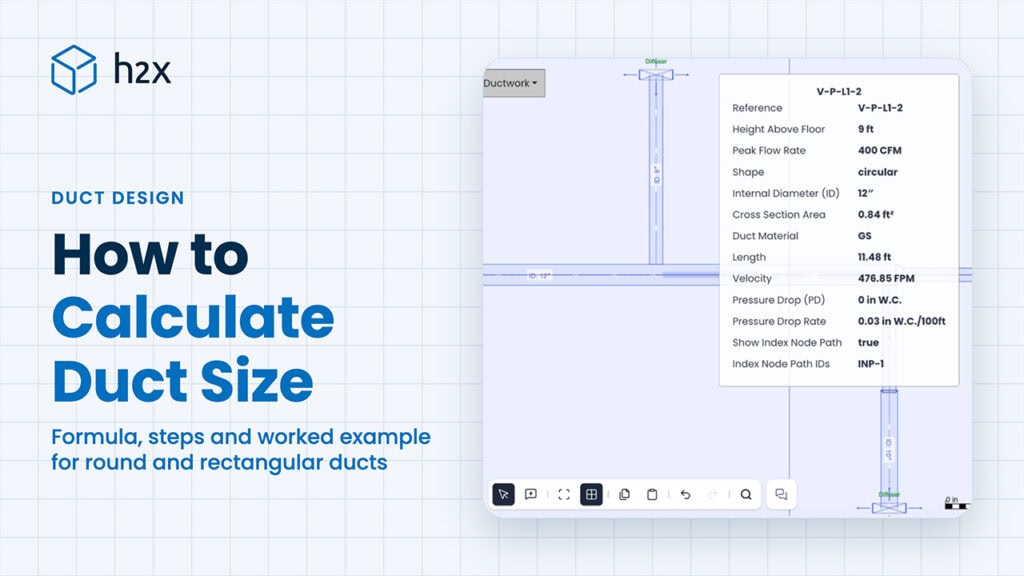
How to Calculate Duct Size for HVAC Systems
Learn how to calculate duct size from airflow, velocity and friction rate, with a worked example for...
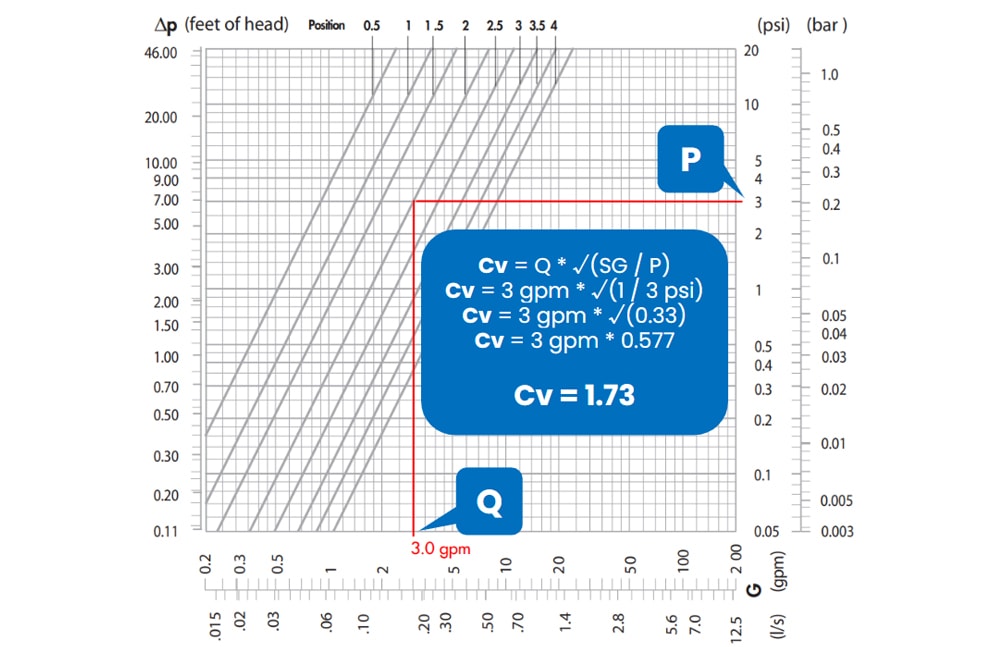
What Are Cv and Kv? Flow Coefficient Formulas & Valve Sizing Explained
Learn how flow coefficient (Cv) impacts valve sizing. Explore their calculation, importance in fluid dynamics, applications, and...
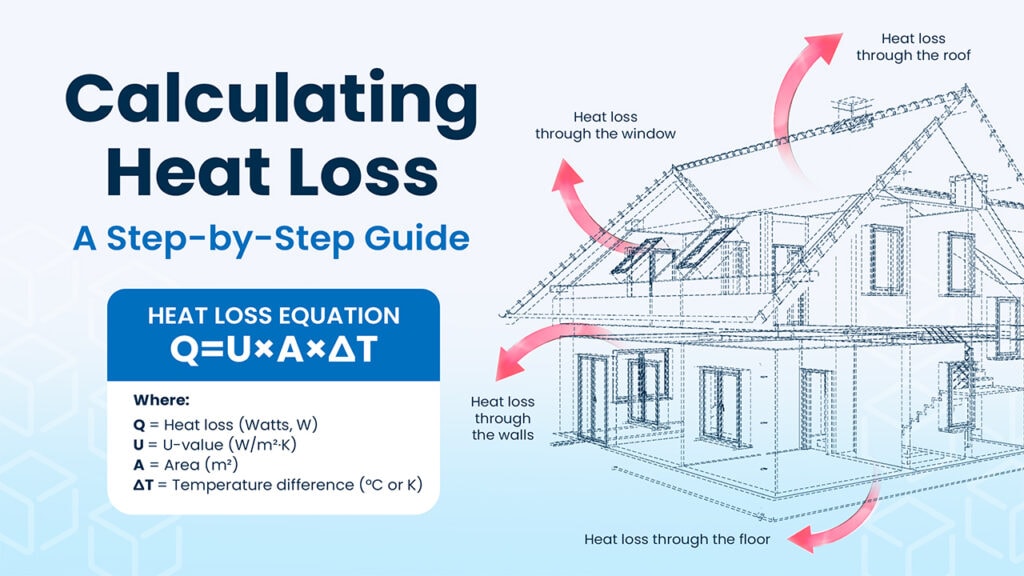
Calculating Heat Loss: A Step-by-Step Guide
Learn how to calculate heat loss using U-values, surface areas, temperature differences, ventilation and thermal bridging.
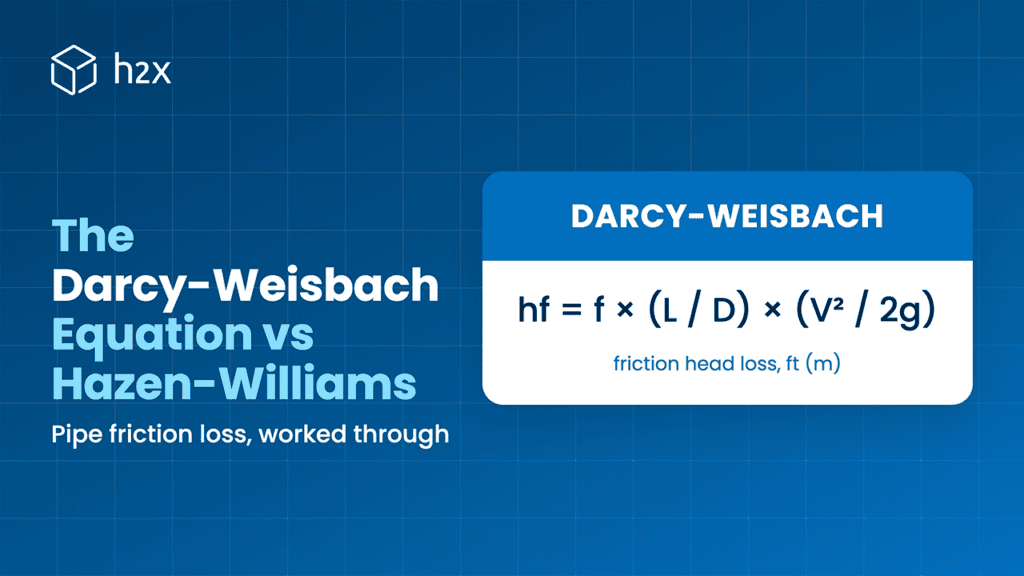
Darcy-Weisbach Equation vs Hazen-Williams for Pipe Friction Loss
Compare the Darcy-Weisbach equation and Hazen-Williams formula, when to use each and how they calculate pipe friction...

How to Size Water Pipes
To size water pipes correctly is critical for the performance of your design. Below, we will explore...
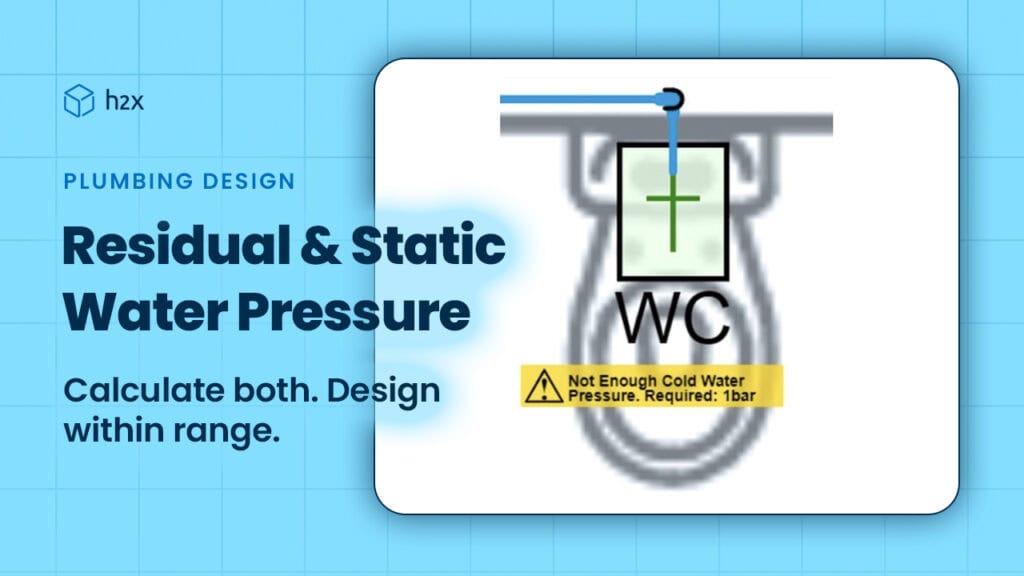
How to Calculate Residual and Static Water Pressure
Learn the difference between residual and static water pressure, how to calculate both through a plumbing system,...
Highlights (Free Downloads)
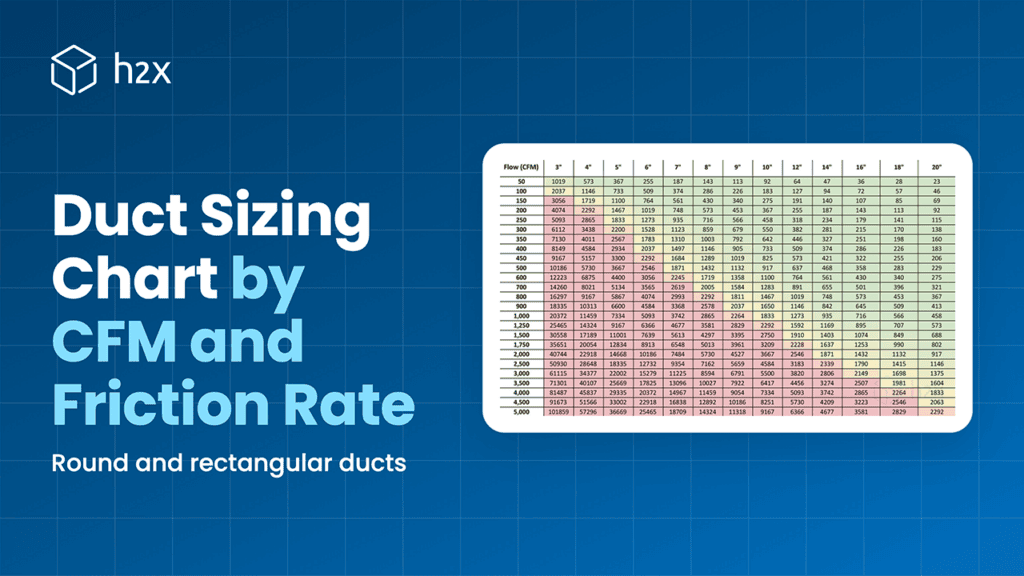
Duct Sizing Chart for CFM, Velocity and Friction Rate
A duct sizing chart for round and rectangular ducts, showing airflow capacity and velocity at common friction...

FREE Pipe Volume Spreadsheet
Access h2x's free pipe volume spreadsheet to streamline calculations, optimise design, and enhance efficiency in piping projects.

Hardy Cross Method – Sizing a Ring Main (FREE Spreadsheet)
Flow rate and friction loss in a pipe network system can be difficult to calculate. When the...