MEP Design and Estimating: Bridging the Gap
A look at how design and estimating function in MEP projects today, where the process breaks down, and what closing the gap could mean for contractors and engineers.

In most MEP projects, design and estimating operate in separate worlds and are carried out by different professionals. Designers produce drawings, estimators receive them, and the two sides rarely speak directly outside of formal RFIs. Most people in the industry accept this workflow as standard, but it carries real costs in time, accuracy, and missed opportunities to bid more competitively.
Key Takeaways:
- Design and estimating are traditionally siloed within MEP projects, with little direct collaboration.
- Estimators spend a large portion of their time on manual takeoffs from completed drawings.
- Value engineering frequently complicates the workflow, since changing one variable can affect the whole system.
- Software that generates bills of materials alongside design could fundamentally change this siloed workflow, saving time and money, and enabling more bids.
- For teams already operating in-house design and estimating workflows, that shift is within reach.
How MEP Design and Estimating Currently Work
In a traditional MEP workflow, the estimator takes over work on the project after receiving the completed design. They receive a finished drawing package and work from there, with little to no involvement during the design phase itself. Communication with designers typically runs through the formal RFI process rather than direct conversation.
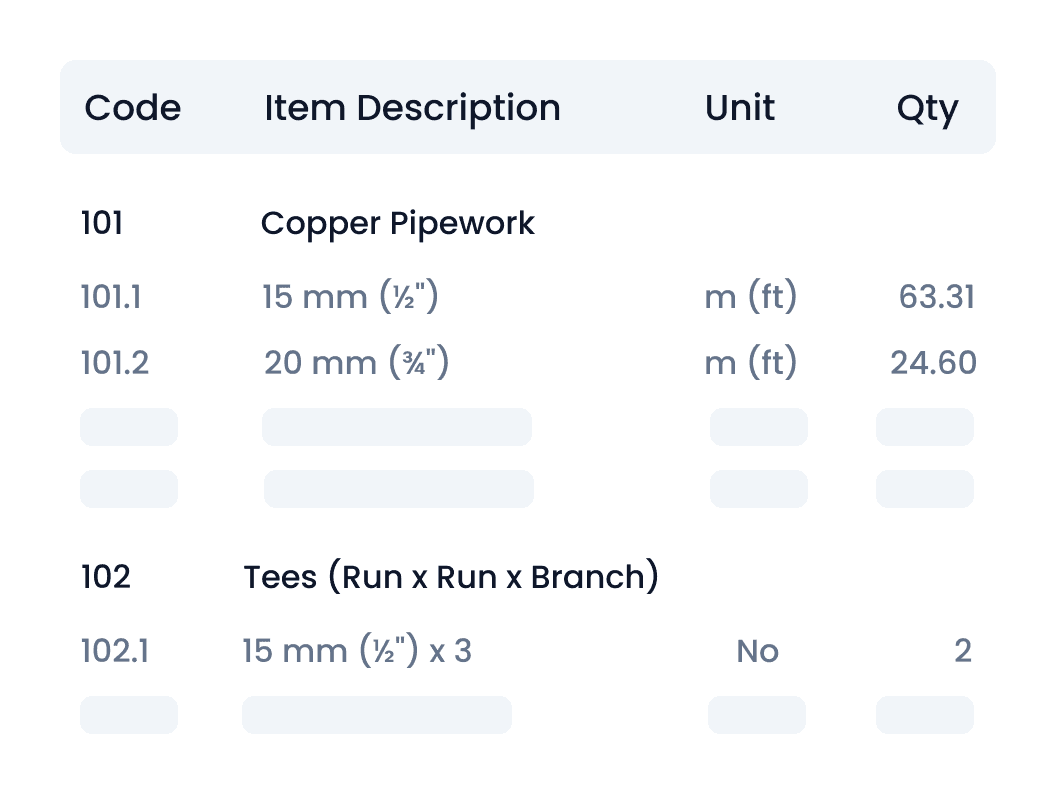
This workflow structure means estimators can only react to or correct design choices that have already been made. Their job begins with the takeoff: manually measuring, counting, and recording every item on the drawings. This often includes pipework lengths, fittings, equipment, supports, and hangers. Before any pricing can begin on the project, the estimator must complete this takeoff step. For a complex MEP package, the takeoff process alone can take days.
This traditional workflow is not a broken system in the sense that it fails to produce an output. It’s worth acknowledging that this process does lead to submitted bids and completed projects. Nevertheless, the separation between design and estimating creates friction at almost every stage, and that friction bears a cost.
Why Value Engineering in MEP Is Harder Than It Looks
Value engineering comes up frequently during the tender stage of a construction project, often as a shorthand directive to “make it cheaper.” In practice, particularly in MEP, value engineering is far more complicated than it sounds.
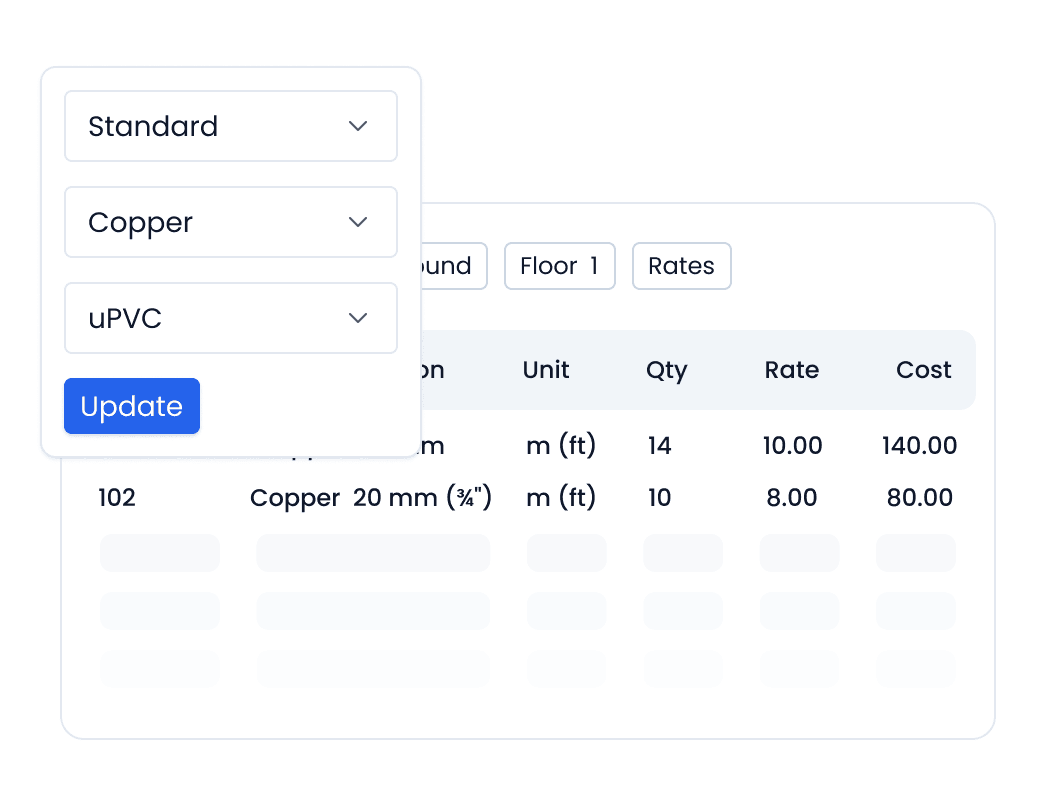
MEP systems are interdependent, and changing even one element of a project has systemic consequences. Take something as straightforward as switching pipe material, from copper to plastic, for example.
On the surface, this choice looks like a simple cost swap. But plastic pipe has different internal diameters than copper pipe of the same nominal size, which changes the velocity of the fluid flowing through it.
A different velocity changes the pressure drop across the system, and a different pressure drop means the original pipe sizing may no longer be correct.
An estimator looking at this pipe material change in isolation cannot simply substitute one material for another and adjust the unit rate. To properly accommodate the change, they would need a full hydraulic recalculation of the affected parts of the system. Without access to the design model or a close working relationship with the designer, that process is hindered.
Installation time and cost can further compound calculation issues
Manufacturers are constantly innovating to produce systems that are faster and easier to install. Push-fit fittings, lighter materials, pre-insulated pipe systems: the installation method varies significantly between all of these newer, different product types. A material that costs more per length may still represent better value overall if it cuts installation time substantially.
An estimator applying value engineering principles properly is not just comparing material costs. They are weighing labour hours, installation complexity, and the knock-on effects for project timelines and site management, too.
Real value engineering in MEP rarely happens at the tender stage, which is precisely where it would deliver the most competitive advantage. Without a live connection to the design, most estimators simply do not have the information they need to model these scenarios accurately, and may drop opportunities as a result.
Where the Silo Actually Hurts
Siloed design and estimating workflows create specific, recurring problems:
- Takeoff time is a bottleneck. Manual measurement from drawings is slow, and errors compound. A missed run of pipework or an incorrect count of fittings can move the bottom line significantly.
- Late-stage changes are expensive to reprice. If the designer revises a section of the drawing, the estimator has to redo that portion of the takeoff from scratch.
- Value engineering opportunities are missed. Without real-time access to a live design model, estimators cannot quickly test alternative materials or system configurations.
- The RFI process is a poor substitute for collaboration. Formal queries slow things down and filter out the informal, iterative conversations that actually lead to better decisions.
None of this is unique to MEP, but the technical complexity of MEP systems makes the consequences sharper. Getting the numbers wrong on a mechanical or electrical package is rarely a small, isolated error.
How Software Changes MEP Design and Estimating Workflows
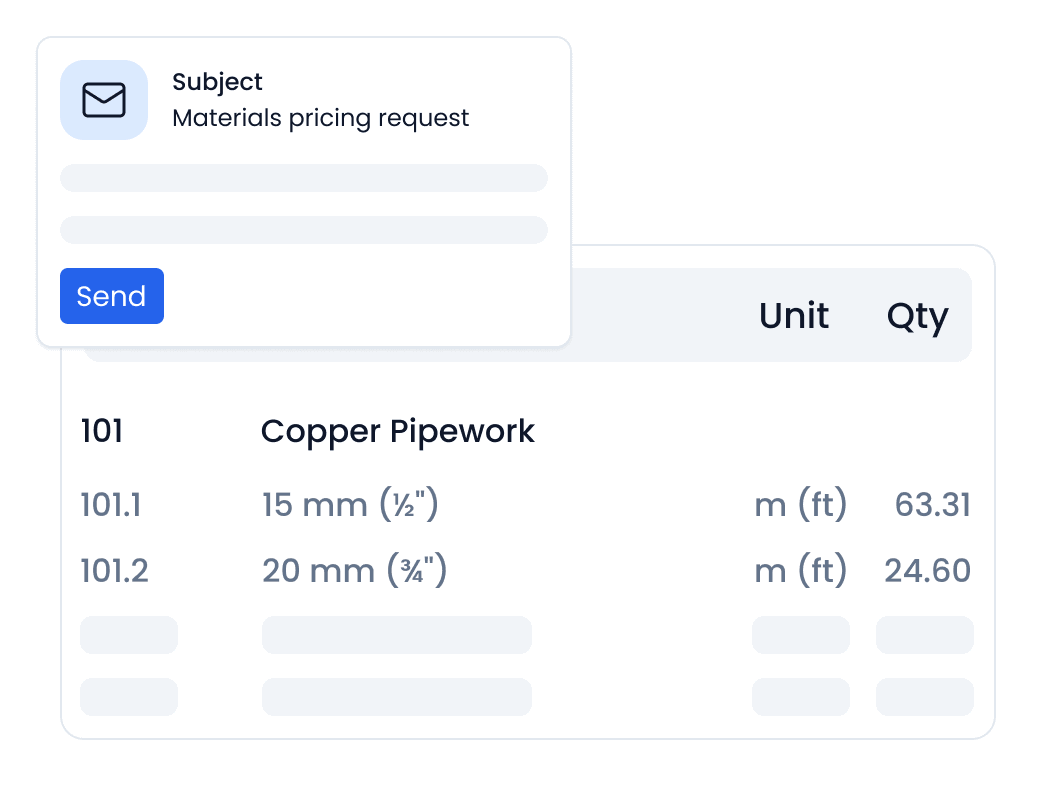
This traditional workflow emerged from the limitations of the tools available at the time. When design lives in PDFs and drawings, and estimating lives in spreadsheets, estimators have no practical way to connect them in real time. However, emerging integrated design software platforms stand to ease those constraints significantly.
When design software generates a detailed bill of materials (BOM) as part of the design process, much of the traditional manual takeoff stage can be reduced or removed. As the designer completes the model, the quantities follow automatically. For contractors and engineering firms that have in-house design and estimating capability, this is a significant shift. The software user can change a pipe material, recalculate the system instantly, generate a new bill of materials, and understand the cost implication all in the same session.
This integration of design and costing does not diminish or eliminate the estimator’s role. Less time on counting and measuring means more time for the skilled work that genuinely requires an estimator’s judgment and experience. This includes sourcing and reviewing supplier quotes, working with project managers on delivery and procurement timelines, and building winning bids.
The Future of MEP Design and Estimating
As design software becomes more capable and more widely adopted, there are emerging questions that the industry has not yet fully answered:
- Will designers share material takeoffs with estimators more openly, even when they are not part of the same team? The technical barrier to doing so is shrinking, and commercial and contractual norms could soon follow.
- Will manual takeoff as a core estimating skill eventually become less central to the role of the estimator? For teams using modern design tools, a scenario like this is possible. But the shift will not happen evenly across the industry, and the judgment, negotiation, and commercial skills required to produce winning tenders will only increase in value.
The silo between design and estimating is not going to disappear overnight. However, if teams are willing to look at how their tools and workflows connect, they can narrow the gap significantly.
How h2x Connects MEP Design and Estimating
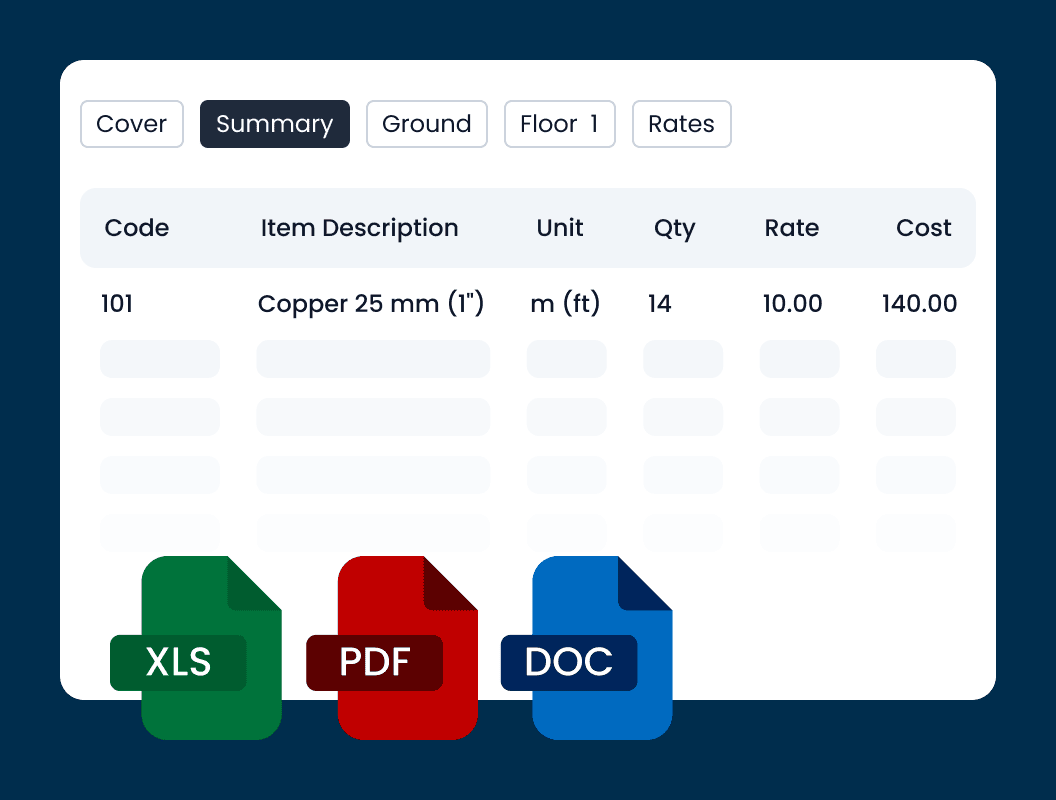
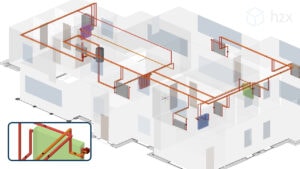
For MEP teams working in HVAC and plumbing system design, h2x produces a detailed, accurate bill of materials as a direct output of the design process and with no separate takeoff stage. As the system is designed in the platform, pipe and duct lengths, fittings, equipment, and components are calculated and logged automatically.
For contractors with in-house design capability, this means value engineering at the tender stage is genuinely practical. Change a material specification, adjust a design parameter, and h2x recalculates the system and updates the quantities immediately. The estimator gets accurate numbers without waiting for a revised drawing package.
Watch a recorded h2x demo to see how the software handles system design and bill of materials generation in a live project, or book a 1:1 call to explore how it fits your team’s workflow.
Conclusion
Design and estimating have operated as separate disciplines in MEP for a long time, and the workflows most teams use today reflect that history. The manual takeoff workflow, the late-stage value engineering conversations that go nowhere, and the RFI as the only real channel between designer and estimator, are all symptoms of a process built around the limitations of legacy tools.
Those limitations can be overcome. For teams that bring design and estimating closer together, whether through shared software, integrated workflows, or simply more deliberate collaboration, the commercial advantage is real.
FAQs on MEP Design and Estimating
What is the difference between MEP design and MEP estimating?
MEP design involves engineering the mechanical, electrical, and plumbing systems for a building — sizing pipework, specifying equipment, and producing drawings that meet the project’s technical requirements. MEP estimating translates those completed designs into costs, by measuring quantities from the drawings and applying material and labour rates to produce a tender price. In most projects, these two functions are carried out separately, with the estimator only receiving the design once it is finished.
Why should MEP design and estimating be connected?
Connecting MEP design and estimating helps teams reduce duplicated work, improve quantity accuracy, and respond faster to design changes. When quantities are generated directly from the design model, estimators can spend less time manually measuring drawings and more time reviewing costs, supplier quotes, labour assumptions, and value engineering options.
Why is value engineering difficult in MEP projects?
MEP systems are highly interdependent, so changing one element has consequences throughout the system. Switching pipe material, for example, affects internal diameter, which changes fluid velocity, which alters pressure drop, which may mean the original pipe sizing is no longer valid. A proper value engineering assessment requires hydraulic recalculation, not just a material cost swap. Without direct access to the design model, most estimators cannot carry out that analysis quickly enough to make value engineering practical at the tender stage.
What is a bill of materials in MEP?
A bill of materials (BOM) in MEP is a detailed list of every component required to install a system, including pipe or duct lengths, fittings, equipment, supports, and hangers, with associated quantities. It is the foundation of any cost estimate. In a traditional workflow, the estimator produces the MEP bill of materials manually through a takeoff from the completed drawings. In integrated design software like h2x, the bill of materials is generated automatically as the system is designed.
How does MEP estimating software reduce takeoff time?
When design software generates quantities as a direct output of the design model, much of the manual takeoff stage can be reduced or removed. Instead of measuring and counting from drawings after the design is complete, the estimator works within the design environment and the quantities update in real time. This removes one of the most time-consuming steps in the traditional MEP estimating workflow, and reduces the risk of counting errors that can significantly affect a bid. Check out our Best MEP Software article to compare 10 leading platforms and see which ones are best suited to different MEP workflows.
Stop doing your MEP takeoff twice.
h2x generates a detailed, accurate bill of materials as a direct output of your system design, so no separate takeoff stage, no manual counting, no waiting for revised drawings. Every pipe length, fitting, equipment item, and component is logged automatically as you design, and updates instantly when anything changes.
Meet the author

Jordan Mills
Jordan Mills is a Civil Engineer and co-founder of h2x, where he leads the UK team.
Article published: May 11, 2026
Last updated: August 13, 2026